Title
THE A REPORT
2025 H2
 Hélène LARIONOVA HAUG
Director
Hélène LARIONOVA HAUG
Director Eurasian Film Market
Updated on 12 May 2026
Overview
Kazakhstan’s film industry is demonstrating dynamic growth. In H2 (1 July–31 December 2025), cinema attendance reached almost 14 million for the top 100 films showing stable growth compared to 2024. Box office revenues for the same period and the same top 100 film releases totalled approximately KZT 27.5 billion (approx. USD 54.8 million) marking a 25-29% increase compared to 2024.
The box office leaders in the second half of the year were the American films Zootopia 2 (KZT 2.75 billion, approx. USD 5.5 million) and Avatar: Fire and Ash (KZT 1.59 billion, approx. USD 3.17 million). Third place was taken by the Kazakh drama The Nest (Ystyq Uya), which nearly matched Avatar in box office results (KZT 1.583 billion, approx. USD 3.15 million).
There is a growing interest in Kazakh films in theatrical distribution, with local productions increasingly competing with Hollywood films in both audience demand and box office performance. In 2025, 79 Kazakh films were released, generating a total annual box office of 24.5 billion (approx. USD 48.80 million).
The integration of the local e-Kino platform, developed at the initiative of the Ministry of Culture—an electronic system designed to monitor box office revenues and ensure greater transparency in film financing—is ongoing. However, the main systems in use are still foreign platforms. Box office data vary and are not publicly accessible, which remains a challenge for producers trying to track the actual revenues of their films.
Overall, industry stakeholders remain optimistic: audience interest is growing, and viewers are becoming more engaged with local content. There is also an increase in commercial film production, driven by strong box office performance. As a result, cinema is becoming more attractive to private investors, creating more financing opportunities for producers. Local streaming platforms are actively developing, producing their own content (originals), and project pitching sessions are held regularly. Nevertheless, challenges remain—these are currently mainly related to new tax legislation, tax rates on the purchase and sale of licensing rights, and the interpretation of profits. All of this places a significant burden on filmmakers and, in some cases, leads to the closure of companies operating in the film industry.
Top 10 Films in Kazakh Box Office (H2 2025)
You can scroll left and right to view the content.
| No. | Title | Director | Country | Genre | Gross (KZT) |
Gross (USD) |
Production Company |
Distribution Company |
|---|---|---|---|---|---|---|---|---|
| 1 | Zootopia 2 | Jared Bush, Byron Howard | USA | Animation | 2757.03M | 5.49M | Walt Disney Animation Studios | Ascar Cinema |
| 2 | Avatar: Fire and Ash | James Cameron | USA | Sci-Fi, Action | 1591.05M | 3.17M | 20th Century Studios | Ascar Cinema |
| 3 | The Nest | Darhan Karipov | Kazakhstan | Drama | 1583.00M | 3.15M | Badykova Prod | Sulpak Cinema |
| 4 | Steal the Groom If You Can | Dakhan Sarkenov | Kazakhstan | Comedy | 1391.96M | 2.77M | Our Media Group | Ascar Cinema |
| 5 | F1: The Movie | Joseph Kosinski | USA | Action | 1209.79M | 2.41M | Apple Studios | Sulpak Cinema |
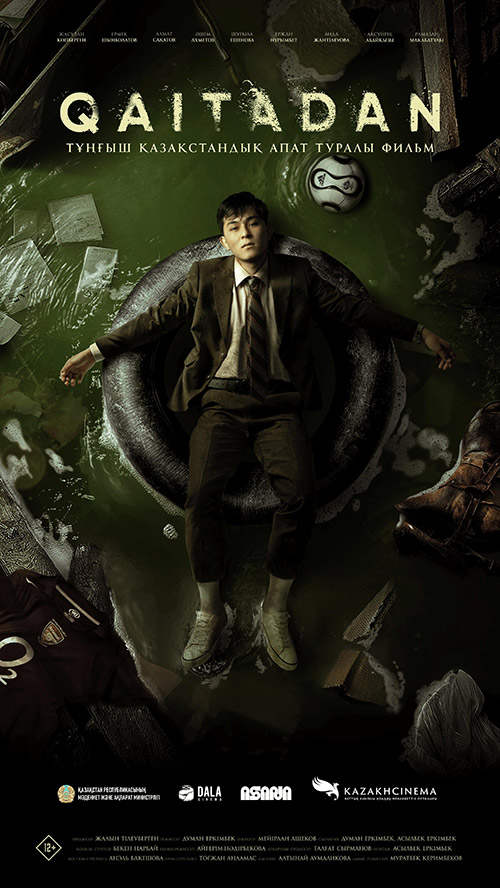
| 6 | Restart | Duman Erkinbek | Kazakhstan | Drama | 1105.70M | 2.20M | Dala Cinema | Asana |
| 7 | Now You See Me: Now You Don’t | Ruben Fleischer | USA | Suspense | 1066.28M | 2.12M | Summit Entertainment, Cohen Pictures, Secret Hideout | Sulpak Cinema |
| 8 | Auru | Aitore Zholdaskali | Kazakhstan | Drama | 1027.83M | 2.05M | Tartaria Films | Asana |
| 9 | What’s Happened | Nurbolhan Sharapov | Kazakhstan | Drama | 908.86M | 1.81M | Ne Production Inc | Asana |
| 10 | Jurassic World: Rebirth | Gareth Edwards | USA | Action | 895.62M | 1.78M | Universal Pictures | Sulpak Cinema |
Top 10 Domestic Films in Kazakh Box Office (H2 2025)
You can scroll left and right to view the content.
| No. | Title | Director | Country | Genre | Gross (KZT) |
Gross (USD) |
Production Company |
Distribution Company |
|---|---|---|---|---|---|---|---|---|
| 1 | The Nest | Darhan Karipov | Kazakhstan | Drama | 1583.00M | 3.15M | Badykova Prod | Sulpak Cinema |
| 2 | Steal the Groom If You Can | Dakhan Sarkenov | Kazakhstan | Comedy | 1391.96M | 2.77M | Our Media Group | Ascar Cinema |
| 3 | Restart | Duman Erkinbek | Kazakhstan | Drama | 1105.70M | 2.20M | Dala Cinema | Asana |
| 4 | Auru | Aitore Zholdaskali | Kazakhstan | Drama | 1027.83M | 2.05M | Tartaria Films | Asana |
| 5 | What’s Happened | Nurbolhan Sharapov | Kazakhstan | Drama | 908.86M | 1.81M | Ne Production Inc | Asana |
| 6 | Brother-in-law in Korea | Darhan Sarkenov | Kazakhstan | Comedy | 886.31M | 1.77M | Ato Production | Sulpak Cinema |
| 7 | A Rich Man’s Son | Abdusaid Shaihislamuli | Kazakhstan | Comedy | 783.74M | 1.56M | Tiger Films | Ascar Cinema |
| 8 | Amenger | Maksat Ospanov | Kazakhstan | Drama | 602.68M | 1.20M | Our Media Group | Ascar Cinema |
| 9 | No 37 | Zhandos Aibasov | Kazakhstan | Drama | 582.74M | 1.16M | Sham | Ascar Cinema |
| 10 | Father’s Son | Ernar Nurgaliev | Kazakhstan | Comedy | 520.40M | 1.04M | Cineria Films | Sulpak Cinema |
Production Landscape
The total number of films produced in Kazakhstan in 2025 is estimated to be between 200 and 250, though precise annual data remains elusive due to the absence of a centralized national tracking system. This figure reflects a noticeable decline compared to 2024, primarily driven by delays in state funding and a tightened economic climate that limited production opportunities. While verified data for the second half of 2025 (H2) suggests approximately 100 theatrical releases, the total annual count includes an estimated 100–150 additional titles from the first half of the year (H1) based on preliminary market observations.
A total of 79 Kazakh films were released in cinemas, the majority of which were dramas and comedies, followed by thrillers and other genres.
Animation is reaching a strategic level. The national studio Kazakhanimation is moving to Astana and becoming the anchor of a new creative cluster. Animators and screenwriters are being recruited. Accelerators have been launched for novice teams. A key aspect is the focus on export: cartoons are produced in two languages, adapted to international formats, and feature storylines based on Turkic mythology and Kazakh folklore.
The official opening of a branch of the renowned American film school the New York Film Academy took place in the city of Kaskelen, in the Almaty Region. This is the third NYFA campus outside the United States and the first global creative university of its kind in Kazakhstan. The branch offers training in five areas through one-year and short-term programmes led by professional instructors from the United States: filmmaking, producing, screenwriting, 3D animation & VFX, and game design.
Financing Models
Key financing models: In Kazakhstan, first of all film production benefits from government support. Each year, the Ministry of Culture allocates a budget for filmmaking, which is distributed based on project pitches organised by the State Centre for Support of National Cinema. In 2025, a total of 444 applications were submitted to the competition, of which 16 projects were selected for state support. During the year, 12 films supported by the state were released theatrically, including Tezek, Fake Arman, 90+1, Qara Qyz, Igromanka, Tarlan, Altyn Adam, Umit Ardaim Zhanymyzda, Zhoqtau, Aromatnoye Serdtse, Qaitadan, and Captain Baitasov. Significant attention in 2025 was given to the international promotion of Kazakh cinema. “Days of Kazakh Cinema” were held in 15 countries, while domestically, nationwide “Days of Kazakh Cinema” took place across all regions, reaching around 2 million viewers, including rural audiences. The Accessible Cinema initiative also continued, providing films with audio description for visually impaired audiences.
A pivotal shift in the industry’s governance occurred with the decision to liquidate the State Centre for Support of National Cinema (SCSNC), originally established in 2019 as the primary operator of state film funding. Following a systemic reform initiative by the Ministry of Culture and Information, the Center's functions are being transferred to the national film studio, Kazakhfilm. This consolidation aims to optimize administrative efficiency and respond to industry-wide calls for greater transparency in the pitching process, which the SCSNC had been criticized for lacking. While the legal transition is expected to take over six months, the Ministry has assured that state financial support for national cinema will remain robust under this new model.
Kazakhfilm, founded in 1934, remains the largest backbone company in the Kazakh film industry. Over its 90-year history, it has produced more than 800 feature, documentary, and animated films, making it the natural successor to the state’s centralized funding functions. In 2025, the studio's production output included two films with 100% state support (one animated and one feature film), one project through a public-private partnership, and three projects without state funding. Additionally, under the state commission, Kazakhanimation completed several series for children aged 3–8. The studio also continues its archival mission, having digitized 15 films and restored 7 others in 2025.
An alternative to state funding is the Tolqyn Film Fund. Established in 2025 at the Astana International Financial Centre, it became the first private venture investment fund in Central Asia and the CIS focused on financing the production, release, and distribution of commercially oriented feature films, as well as international co-productions. Since its launch, the fund has reviewed 120 project applications from 12 countries, investing in 4 of them. Over the next three years, it plans to produce 19 projects. The fund focuses on high-concept films aimed at wide theatrical release, and does not consider arthouse or documentary projects. A second fund with an expanded mandate—covering series, animation, and video games—is scheduled to launch in 2026.
Currently, most films in Kazakhstan are produced with private funding. Local streaming platforms have also started producing their own originals, including both films and series.
Kazakhstan operates a government-backed tax incentive program for film production under the Law On Cinema. Under this scheme, both domestic and foreign producers implementing projects in the country are eligible for a 30% tax rebate on qualified production expenses. However, the process for submitting documentation and receiving the actual reimbursement remains complex and requires further development of the tax rebate mechanism.
Distribution Climate
In H2, the distribution of Kazakh films was dominated by three key players: Sulpak Cinema, Ascar Cinema (ex Meloman), Asana. Sulpak Cinema is the official representative of Warner Bros., Universal Pictures, Paramount Pictures. Ascar Cinema represents Walt Disney and Sony Pictures.
Hollywood releases are typically distributed through local partners under agency agreements with international studios rather than exclusively through state channels. The regulatory framework, defined by the Law on Cinematography, provides support and subsidies for production but imposes no direct restrictions on the screening of Hollywood blockbusters.
Asana was established in 2022, and its portfolio includes projects from studios such as A24, StudioCanal, NEON, and Lionsgate—encompassing both box-office hits and festival films.
Based on the top 100 films released in Kazakhstan in H2, the distribution market is divided among the following companies: Ascar Cinema 40%, Sulpak Cinema 30%, and Asana 20%. A notable shift since H1 is that the distribution market has evolved from a duopoly into a three-player landscape, driven by the rapid rise of Asana, which now controls roughly 20% of the top-100 box office. Together, they accounted for over 92% of total box office revenues, highlighting the high concentration of distribution within the national market. Independent and niche distributors maintain a limited presence, despite occasional successful releases.
The box office breakdown for H2, based on the top 100 films, shows that U.S. productions dominate at 42% of releases, followed by Kazakh films at 31%. Notably, Kyrgyz films captured 6% of the market, marking an emerging trend of regional content consumption. In terms of box office performance, U.S. and Kazakh films share the lead, split roughly 50/50.
This rise in Kyrgyz cinema is highlighted by the success of diverse titles such as the thriller 102 by Sapar Saynazarov (KZT 151.26 million/USD 301,317), the horror sequel Ifrit 2: New Story by Dastan Damirov (KZT 98.39 million/USD 195,998), and the romantic comedy Lofty Feelings by Maksat Ospanov (KZT 94.67 million/USD 188,577). The broad genre appeal of these top-performing films suggests that the trend is driven by a growing audience curiosity regarding neighboring Central Asian cultures rather than a preference for any single cinematic style.
Currently, there are no legislative quotas regulating theatrical content by country or other criteria, and release schedules are determined locally by distributors based on market demand and audience preferences. Discussions are ongoing regarding the elimination of mandatory marketing fees imposed on producers for screening films in major cinema chains, which currently significantly limit the ability to release films in these chains.
Theatrical Reach
The number of cinemas in Kazakhstan is estimated between 107 and 120, primarily concentrated in Almaty, Astana, and Shymkent. This range stems from the lack of official national statistics and the high volatility of small regional cinemas, which frequently open or close outside major distribution networks. While major chains like Kinopark have recently expanded, the closure of smaller venues in remote areas makes a definitive count difficult.
The largest cinema chain in the country remains Kinopark. As of early 2026, the chain operates 31 cinemas across 13 cities in Kazakhstan, including 11 cinemas in Almaty, 3 in Astana, 3 in Aktobe, 4 in Shymkent, 2 in Aktau, and 8 cinemas in various other regions.
The second-largest chain by number of cinemas is Chaplin Cinema, with 5 cinemas (47 screens) located in Almaty and Astana.
In 2025, Kazakhstan’s theatrical market showed stable growth across all key indicators:
- Total films released: 438 titles.
- Average ticket price: KZT 2,300–2,400 (approx. USD 4.6–4.8)
- Average ticket price: KZT 2,300–2,400 (approx. USD 4.6–4.8)
The average ticket price saw a significant year-on-year increase of 28–34%, which has naturally contributed to the overall growth in box office revenue. While this suggests that growth is partially price-driven, it does not exclude a potential rise in organic audience demand. Therefore, the current box office performance should be interpreted as a combined result of inflationary adjustments and evolving market interest.
In annual terms, cinema ticket prices increased in 14 out of 20 regions of Kazakhstan. The sharpest rise was recorded in Mangystau Region (27%), followed by Astana (22.9%), Almaty (18%) and Shymkent (18.5%). Prices remained unchanged from last year in Aktobe, Zhezkasgan, Kokshetau, Konayev, Kyzylorda and Pavlodar.
Data from the Rentrak reporting system confirms that audience genre preferences remain stable: comedies and dramas continue to dominate. However, the presence of six drama films in the H2 top 10 reflects a notable shift in the market's structural landscape.
This trend is largely attributed to changes in the supply of content following the closure of Tiger Films, a major production house previously affiliated with the Kinopark cinema chain. In the past, the industry’s heavy tilt toward comedies was partly driven by Tiger Films’ strategy of prioritizing its own comedy productions during prime-time screenings. With the exit of this dominant player, a more diverse range of external content has filled the gap, allowing drama titles to secure a larger market share and recalibrating the overall genre distribution.

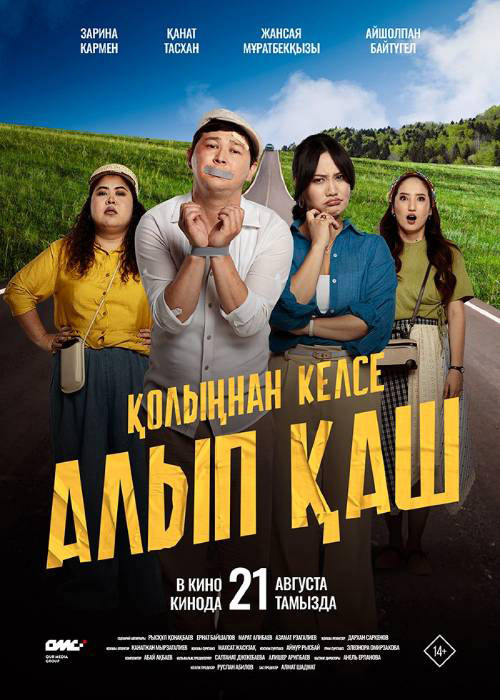
Steal the Groom If You Can © Ascar Cinema 2025
Restart © @ DALA CINEMA 2025
Technology and Production Services
According to statistics published by the Bureau of National Statistics of ASPiR RK, in recent years Kazakhstan has seen a significant increase in the number of film organizations. Their number has grown by 25%, from 64 to 80.
The current ecosystem includes traditional production studios, numerous private film production houses and producers centers, a growing post-production and VFX sector (local teams and emerging CGI studios), as well as animation labs—both state-supported and independent—benefiting from government subsidies for Kazakh-language animation.
Among film production companies, notable names include Kazakhfilm Studio, Salem Entertainment—which in 2025 announced a co-production with Jackie Chan—Sataifilm, Taurus Asia Production, QARA Studios, New Era Films, Rocket Stories, Short Brothers, BM Production, MG Production, Clover Street Production, Masterwork Film, Dream Team Cinema, Aldongar Productions, Tartaria Films, and others. Streaming platforms such as Freedom Media and Unico Play also hold strong positions in production volumes, as does the aforementioned Tolqyn Film Fund.
However, the industry still faces challenges such as the new tax code, insufficient infrastructure, limited diversity in film genres, weak marketing both domestically and internationally due to budget constraints, a shortage of skilled professionals, and inadequate copyright protection.
Alongside record achievements, 2025 was also marked by controversies. In the autumn, the film Cadet (dir. Adilkhan Yerzhanov) from Tiger Films—the largest production company in 2024—was withdrawn from Oscar consideration due to allegations of a conflict of interest. As a result, Tiger Films announced the termination of all current and future projects—a move unprecedented in the Kazakh film market.
Streaming Platforms and Digital Growth
Today in Kazakhstan, online streaming platforms are becoming the primary way to watch films and series. Users are increasingly skipping traditional cinemas, preferring the convenience of streaming on Smart TVs, smartphones, and tablets. In 2025–2026, Kazakhstan’s OTT market is a hybrid ecosystem consisting of three groups:
- Local platforms: Unico Play, Freedom Media, TV+, Qazaqsha, BeeTV
- Russian services: KinoPoisk, Ivi, Okko, Start, Premier, Amediateka, More.tv, Viju, 1tv.ru, and others
- Global players: Megogo, Netflix, Amazon Prime Video, HBO Max (launched/expanding in the region by 2025), Apple TV+, YouTube Premium
- Russian services: KinoPoisk, Ivi, Okko, Start, Premier, Amediateka, More.tv, Viju, 1tv.ru, and others
- Global players: Megogo, Netflix, Amazon Prime Video, HBO Max (launched/expanding in the region by 2025), Apple TV+, YouTube Premium
According to the analytical report Youth of Kazakhstan for 2024, one of the most common leisure activities among young people is watching films and TV series online. Of those surveyed, 42.2% reported doing this regularly, 38.4% occasionally, and 15.2% rarely. Only 3.5% said they never spend time on this type of pastime, while another 0.8% found it difficult to answer. The range of the prices for subscription varies from USD 4 to 10 (Netflix) per month.
Two new local streaming platforms, launched in 2025, are actively trying to secure leading positions in Kazakhstan. Here is a brief overview of their results over the past year:
Freedom Media is part of the Freedom SuperApp, offering a converged digital experience that spans VOD, linear TV, and live sports. Its VOD library features over 5,000 titles from major global studios such as Disney, NBCUniversal, and Paramount, with a strong emphasis on localization—providing 2,000+ hours of Kazakh-dubbed content for the domestic audience. Beyond standard entertainment, the platform differentiates itself through a robust sports vertical, broadcasting over 10,000 live events annually, including the UEFA Champions League, Premier League, and UFC. While specific financial and subscriber metrics are not publicly disclosed at this stage, Freedom Media’s integration into a multi-service app and its aggressive acquisition of international premium rights position it as a significant player in Kazakhstan’s evolving streaming market.
Unico Play: officially launched in September 2025, is the streaming platform within the Uni-Q Group media ecosystem and currently offers more than 3,500 titles. The platform has already released over six original productions, including Target, Black Caviar, Major Fake, Bake It Till You Make It, Uncle Coach and the co-production Nukte. Eleven additional original series and films are currently in development, among them Salt and the historical drama Sisters (Bikesh), continuing the company’s focus on locally rooted stories produced to contemporary standards with international potential. As of December 2025, Unico Play reports 1.3 million monthly active users. The subscription price is KZT 990 (approx. USD 2), positioning the service as widely accessible to local audiences. Within the broader Uni-Q Group ecosystem, localization and dubbing have become key growth areas. To date, nearly 2,000 hours of content have been localized, with an additional 8,900 hours subtitled using AI tools. The company also invests in talent development. The first season of the Sheber educational program, hosted on Unico Play, received 663 applications and resulted in 10 completed short films. The Qysqa short film initiative, integrated into the platform’s library, now features 103 Kazakh short films.
- Note: Exchange rate applied throughout the report: 502 KZT/USD (as at 31 December 2025)
Interview with Ernar KURMASHEV
CEO, TOLQYN Film Fund

Ernar Kurmashev is a film producer, CEO of TOLQYN Film Fund (OEIC), and coordinator of the Film Industry Development Committee under the Alliance of Creative Industries of Kazakhstan. He is the founder of the film company New Era Films (formerly Astana Film Fund), where such projects as Districts, The Businessmen, The Gentle Indifference of the World, and A Dark, Dark Man were produced—films that became notable releases in contemporary Kazakh cinema and at major international A-list festivals. He is also widely known as the producer of Offline Holidays, a popular children’s film franchise that later inspired the creation of a summer film camp. Ernar actively promotes new models of financing, production, and monetisation of intellectual property.
Q. How would you assess the level of film production in Kazakhstan over the past six months? What trends and changes would you highlight?
A.To be honest, the level of film production in Kazakhstan has noticeably increased over the past six months, but this growth is uneven. On the one hand, there are more projects—both in number and in genre diversity. We see strong growth in commercial cinema, especially in comedy and family films, alongside the emergence of bolder auteur projects and a growing interest in national identity, language, and culture. On the other hand, the market remains highly fragmented. Some teams are developing systematically, investing in scripts, production, and marketing, while others operate more intuitively, without a clear understanding of film economics.
The key trend is that cinema is gradually moving away from being a “one-off gamble” and is starting to be seen as an industry. This is reflected in increased investor interest, the emergence of funds, the professionalisation of producers, and a more pragmatic discussion around profitability and risk.
Q. How do you assess the distribution market? How is it evolving year by year?
A.The distribution market is probably the most vulnerable part of the system. It is growing more slowly than production, which creates a major imbalance. Cinemas remain the key window for commercial success, but issues such as screening allocation, transparency of reporting, and conditions for local content continue to raise concerns among producers.
Each year, the market becomes more competitive, but not necessarily fairer. There is still no unified digital system, full transparency in ticket sales, or equal conditions for national cinema. This slows development and reduces investor confidence.
Q. How are streaming platforms influencing the market? How are they changing production and distribution?
A.Streaming platforms are not a threat to cinema, but its natural extension. They have already changed the rules of the game. First, they give content a second life—films are no longer limited to theatrical release but have a long online screening path. Second, platforms are raising quality standards in writing, pacing, and storytelling.
For Kazakhstan, streaming also opens access to international audiences. Local stories, language, and culture are gaining visibility abroad. However, streaming does not replace cinemas—it requires a different production logic, budgets, and distribution strategies.
Q. Are there obstacles or challenges in the film industry you would like to see addressed?
A.Yes, and they are quite systemic. The main issue is the tax and regulatory burden on filmmakers. Cinema is one of the riskiest businesses, yet it is taxed similarly to traditional commercial sectors. The second issue is the lack of transparency and monopolisation in distribution, which hinders healthy competition and discourages investment in local content. The third is the lack of long-term vision. There is a need for a 5–10 year strategy: do we simply want a box-office-driven market or real creative economy?
Q. Are new opportunities emerging with market development? If so, what are they?
A.Absolutely—there are more opportunities than ever. First, private investment and the emergence of specialised funds: cinema is increasingly seen as an investment tool, not just art. Second, the development of AI and digital technologies. Kazakhstan could become a platform for AI animation, virtual production, and hybrid content formats. Third, the growth of family and children’s content, which is strategically important both culturally and economically.
Q. Kazakhstan as a co-production hub—what is happening in this area?
A.Kazakhstan is becoming an increasingly attractive destination for international co-productions. The country offers strong locations, talented crews, competitive budgets, and a growing professional level. However, to fully realise this potential, systemic measures are needed: cash rebates, tax incentives, a film commission, and clear rules for foreign producers. If implemented, Kazakhstan could become a regional hub for film and content in Central Asia and beyond.
Q. What is your overall impression of the film market today?
A.I would say that Kazakhstan’s film industry is at a stage of maturation. We have moved beyond chaos but have not yet reached a fully developed industry.
The next 2–3 years will be decisive. This is the moment when the foundations are being laid: who will become key players, what rules will govern the market, and what role cinema will play in the country’s economy.
Hélène LARIONOVA HAUG
Director / Eurasian Film Market
Helene has over 20 years of experience in the film industry and related creative industries with a focus on developing international cooperation. Helene is a member of NETPAC (Network for the Promotion of Asia Pacific Cinema) and National Academy of Motion Picture Arts and Sciences of the Republic of Kazakhstan. She is also an Advisor in the field of the film industry in the Alliance of Creative Industries of Kazakhstan. Since 2022, Helene has been the CEO of the major film market in Central Asia - Eurasian Film Market.