Title
THE A REPORT
2026 H1
 Mansour JAHANI
Independent Journalist
Mansour JAHANI
Independent Journalist
Updated on 6 Oct 2026
Overview
In early January 2026, specifically on the 8th and 9th, public discontent regarding livelihood, economic, and political issues, alongside civil protests in Iran, escalated into street unrest and violence; tragically, this resulted in 3,117 deaths and a large number of injuries. Consequently, amidst the intensifying domestic turmoil and external threats, both national and international internet access was completely cut off for 21 days, beginning on January 8, 2026 (the national network was restored on January 29, followed gradually by international access) and cinemas across Iran were shut down, a development that dealt the first major blow to the Iranian film industry in the first half of 2026.
The 44th edition of the Fajr National Film Festival, Iran's most important cinematic event, took place at Tehran's Milad Tower from February 1 to 11, 2026. The festival featured 31 feature films by both debut and established filmmakers, 13 documentaries, and 13 Iranian short films in the “Crystal Simorgh Competition,” alongside two feature films screened out of competition.
Two months into 2026, a third asymmetric war unfortunately broke out in Iran. On the second day of the conflict (Sunday, March 1, 2026), the Shokoufeh Cinema in East Tehran was struck twice, sustaining severe destruction and overall damage. The cinema is currently closed, and given the extent of the damage, it does not appear likely to reopen in the coming months.
Shokoufeh Cinema, located at Shohada Square in Tehran, is one of the Iranian capital's oldest cinemas. Originally built in 1962, spanning 2,000 square meters with 1,100 seats, it was one of the country's largest cinemas. It returned to operation in 2009 following renovations and the addition of three screens, becoming one of the best-equipped cinemas in southeast Tehran. During this conflict, the roof of its main auditorium, which has a capacity of 500 people, sustained severe damage.
On Monday, March 2, 2026, the Iranian House of Cinema issued a statement condemning the recent aggression against Iranian territory; on Tuesday, March 3, 2026, following airstrikes on civilian areas in Tehran, the House of Cinema’s Building No. 1 along with several residential units on Semnan Alley was struck and partially destroyed.
On the night of Monday, March 23, 2026, the home of Abbas Kiarostami, the renowned Iranian director whose 1997 Palme d'Or win at the Cannes International Film Festival for the film Taste of Cherry marked the beginning of the global phenomenon of Iranian cinema, was damaged during a nighttime airstrike on Tehran's Chizar neighborhood.
Furthermore, airstrikes during this war damaged the building of the Documentary, Experimental & Animation Film Center (DEFC), which supports the Iran International Documentary Film Festival “Cinema Vérité” as well as the Iranian Youth Cinema Society’s main training office in Tehran (which provides specialized training for young filmmakers) and the Society’s office in the city of Ilam.
Top 9 Domestic Films in Iran Box Office (H1 2026)
You can scroll left and right to view the content.
| No. | Title | Director | Country | Genre | Gross (IRR) | Gross (USD) | Production Company | Distribution Company |
|---|---|---|---|---|---|---|---|---|
| 1 | Antique | Hadi Naeiji | Iran | Comedy | 530.49B | 378.92K | Mahmood Babaei | Filmiran |
| 2 | Tehran Another View | Ali Behrad | Iran | Drama | 471.34B | 336.67K | Majid Karimi | Mehregan Film |
| 3 | Taxidermy | Mohammad Paydar | Iran | Comedy | 147.69B | 105.49K | Mohammad Javad Movahed | Bahman Sabz Institute |
| 4 | Mid Night | Mohammad Hossein Mahdavian | Iran | Drama | 101.83B | 72.73K | Habibollah Valinejad | Bahman Sabz Institute |
| 5 | Journey to Limonia | Kamal Moghadam | Iran | Fantasy | 77.07B | 55.05K | Mohsen Mosaferchi | Rahe Erfan Institute |
| 6 | The Gambler | Mohsen Bahari | Iran | Drama | 17.26B | 12.33K | Farabi Cinema Foundation | Bahman Sabz Institute |
| 7 | Paradise of Criminals | Masoud Jafari Jozani | Iran | Drama | 13.94B | 9.96K | Farabi Cinema Foundation, Jozan Film | Bahman Sabz Institute |
| 8 | Lifeline | Vahid Mousaian | Iran | Drama | 10.30B | 7.36K | Farabi Cinema Foundation | Bahman Sabz Institute |
| 9 | The Boy and the Sword | Emad Rahmani, Mehrdad Mehrabi | Iran | Animation | 0.85B | 0.61K | Soure Cinema Organization | Bahman Sabz Institute |
Production Landscape
No official statistics on H1 2026 film production are available due to wartime conditions. Feature film production in H1 2026 is estimated to have fallen by 50% compared with H2 2025. Following the ceasefire, around 50 feature-length narrative films are currently in pre-production, production or post-production. A further 20 non-theatrical films (feature fiction, feature documentaries, short fiction and animation) have been completed and must be distributed via VOD or other channels.
Wars always entail various consequences ranging from the human toll to the destruction of infrastructure and damage to people's livelihoods. For instance, many Iranian film industry professionals found themselves out of work during this period; wartime conditions have severely affected the film industry and filmmakers, as well as society at large and businesses in general. Amidst this, the cultural and artistic sectors suffered the most, as such matters ceased to be the primary concern for the public.
Amidst the war, the Association of Iranian Cinema Directors issued a statement calling for attention to the livelihood challenges facing the Iranian film community and urging officials to address these issues. Excerpts from the guild's statement read: “It is an undeniable fact that the recent war has had a severe negative impact on many businesses; the Iranian cinema industry effectively ground to a halt with the outbreak of the conflict. Unfortunately, the consequences for the livelihoods of film professionals became apparent almost immediately, triggering widespread unemployment and jeopardizing the financial stability of a large segment of the industry. Filmmakers, who were already grappling with job insecurity, now face a critical crisis due to this war.”
In a statement, 30 guilds and associations affiliated with the House of Iranian Cinema, while supporting the professional and livelihood-related concerns raised by the Association of Iranian Cinema Directors and emphasizing their mandate to uphold the dignity and status of artists and professionals in the industry, highlighted the economic hardships and widespread stagnation currently overshadowing Iranian cinema.
The guilds and associations of the House of Iranian Cinema pointed to the “absence of an efficient support system, the lack of unemployment insurance, limited social security coverage, and long-standing neglect regarding retirement status” as issues that have manifested themselves, more than ever before, as vulnerabilities of the profession.
These 30 guilds and associations also declared that “enhancing insurance mechanisms, establishing sustainable support for production and capital guarantees during extraordinary circumstances such as war, organizing employment conditions, and improving retirement provisions are considered not merely professional demands, but a necessity for the continued cultural and creative vitality of Iranian cinema.”
This statement emphasizes the need to strengthen the professional foundations of Iranian cinema, a goal achievable only through institutional cooperation, prudent planning, and the effective support and attention of the bodies responsible for culture and the arts. It identifies the safeguarding of job security and the dignity of the cinema workforce as a prerequisite for preserving this artistic and professional legacy, noting that “disregarding this situation casts the future of those in the film industry into a state of uncertainty.”
Even before the war began, many Iranian filmmakers were facing challenges such as the renewal of social security coverage, medical expenses, unemployment insurance, and livelihood issues, problems that have unfortunately been exacerbated by the recent war.
Despite these circumstances, film production in Iranian cinema has not come to a complete halt; in the wake of the war and the establishment of the ceasefire, films centering on the 12-day war and the recent 40-day conflict are currently moving through their pre-production, production, and post-production stages.
Cinema holds a special place among the arts in Iran. Around 100 feature films have been produced in Iran in some recent years, a trend that did not cease even during recent conflicts. Iranian cinema has given rise to a unique genre known as “Sacred Defense Cinema”; this genre focuses on the Iran-Iraq War of the 1980s and is somewhat reminiscent of Hollywood films centered on the Vietnam War. Works in this genre are patriotic in nature, featuring heroes who are martyrs in the defense of Iran. The themes of these films cover a wide spectrum, ranging from battle scenes to the challenges veterans face upon returning from the war. Over the course of three decades, approximately 200 films in the “Sacred Defense” genre have been produced.
In the early days of this war, the Rezvan studio in Tehran was also destroyed, and the production staff were busy preparing an 18-minute animation for children and teenagers using 3D techniques and artificial intelligence tools; despite the destruction of the studio, they continued their activities and delivered it for broadcast on Iranian television.
On Sunday, April 19, 2026, Iran’s Farabi Cinema Foundation issued a call for entries for a screenwriting competition titled “The School I Used to Go To.” This initiative honors the memory of the children from the “Shajareh Tayyebeh” primary school in Minab where, tragically, 168 innocent young children (aged 6 to 11) and several of their caring, dedicated teachers lost their lives. It invites film industry professionals and specialists active in the field of screenwriting to participate.
The DEFC reported activity involving ten films in H1 2026, including two feature documentaries, three medium-length documentaries, two short documentaries, two animations, and support for one additional medium-length documentary. The Art and Experience Cinema Group screened 16 films (nine narrative features, one documentary and six narrative shorts). More than 150 short films were produced across Iran, along with about 90 by students and alumni of the Iranian Youth Cinema Society.
Financing Models
Iran’s Farabi Cinema Foundation, affiliated with the Ministry of Culture and Islamic Guidance and recognized as the national body for Iranian cinema, has transparently outlined the preliminary steps for selecting the projects it will support. This move, taken in light of the country's specific circumstances, particularly the 40-day war and anticipated financial constraints for the year, aims to enable the Foundation to fulfill its mandate of supporting professional film productions in accordance with established priorities.
This program has been formulated based on an assessment and critical review of past actions, existing structures, processes, and procedures, and is aligned with the overarching goals and policies of the Ministry of Culture and Islamic Guidance and the Cinema and Audiovisual Affairs Organization of Iran for the year 2026.
The five-fold objectives of the aforementioned support measures are: enhancing the quality of professional cinema productions with an emphasis on consensus, consolidating the foundations of the Revolution, fostering national cohesion, and inspiring hope; growing and developing professional cinema and strengthening national cinema by prioritizing the production of distinguished, audience-friendly works; developing investment-friendly infrastructure and innovative financing methods for professional cinema; securing a share for Iranian cinema in global markets by facilitating the production and distribution processes of cinematic works; and supporting film productions for children and adolescents aimed at raising awareness and promoting ethical and religious teachings.
The Farabi Cinema Foundation issued a call for the production of war-related works; this initiative resulted in three films centered on the 12-Day War, which were screened at the 44th Fajr Film Festival. Additionally, several screenplays were commissioned during the conflict, spanning categories such as children's cinema, the Minab school tragedy, and adult-oriented drama, with the subjects of these projects currently taking shape.
The Farabi Cinema Foundation, acting as the authority on children's cinema and working alongside the secretariat of the Iran International Film Festival for Children and Youth in Isfahan, is currently pursuing a special project centered on the Minab tragedy. The project is presently in the initial stage of filmmaking, specifically the development of the narrative world to ensure the resulting works possess the necessary substance and maturity.
The Foundation reports that it has provided financial support for the production of 15 films, all of which have entered production, including one co-production with Turkey. It selects projects through a pitching process: an initial expert assessment, a screening by a specialized working group, and then a pitching stage. No precise information is available on the Foundation's 2026 budget.
As in previous years, the Foundation set up the Iranian pavilion at the Cannes Film Market (May 12–20, 2026), dedicated to the children of the Shajareh Tayyebeh school in Minab. The pavilion presented the 'Minab Cinematic Narratives Support Fund', which aims to support film projects on the Minab tragedy and the showcasing of Iranian works at international events.


Unfortunately, due to the prevailing wartime conditions, feature film production has declined, and the situation regarding theatrical screenings is poor; this has resulted in financial losses for rights holders, particularly in the private sector, even though online platforms have endeavored to improve market conditions somewhat through increased activity.
For this reason, the post-war economic situation has cast serious doubt on investment in Iranian cinema. When economic and social conditions are uncertain, investors do not know on what basis to engage in film production or what future awaits their capital.
However, taking all these circumstances and factors into account, a number of fiction and documentary filmmakers in Iran have announced their readiness to produce films centered on this war. In fact, Iran’s film production industry did not come to a halt even during the war, with the production of movies and series for television and home-viewing platforms continuing, and this process is proceeding, albeit slowly, during the current ceasefire.
None of the films released in H1 2026 reached break-even on theatrical revenue alone. The production cost of a feature film is estimated to exceed USD 500,000 in H1 2026.
Distribution Climate
Top 4 Distributors' Market Share, H1 2026
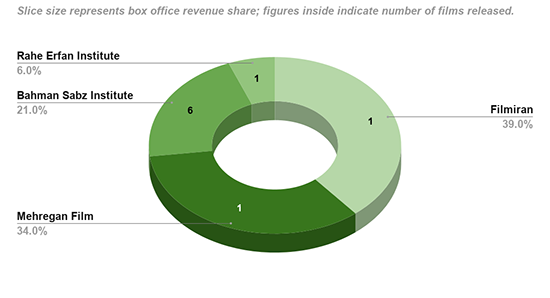
With the outbreak of this war, specifically on Saturday, February 28, 2026, and in light of wartime conditions, all cinemas across Iran were closed for 18 days. Even as the attacks continued, 145 cinemas resumed limited operations in various cities, screening four new films with nationalistic and epic themes, supported and distributed by the Bahman Sabz Institute film organization, an entity affiliated with the Art Bureau of the Islamic Development Organization.
The number of domestic feature films released theatrically declined significantly in H1 2026, with only nine new releases compared with 55 in H1 2025, a decrease of approximately 84%, reflecting theatre closures and wartime conditions.
No. of Domestic Feature Films and Screens (2019–H1 2026)
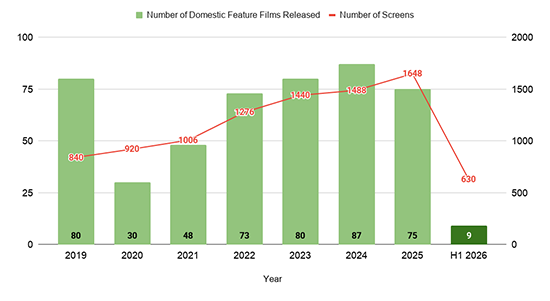
The Bahman Sabz cinema chain continued screening films across 60 cinemas in more than 20 provinces spanning 41 cities nationwide as part of the “Cinema Committed to Iran” initiative.
Given the circumstances and the bombing of various cities, cinema ticket sales can be considered one of the successes of Iranian cinema. This reflects the public's interest in cinema and, of course, their courage as they were willing to go to the movies even while under bombardment.
During and after the war, the atmosphere of public anxiety directly impacted film screenings and audience turnout; in fact, comparing May–June 2026 with November–December 2025, attendance fell by about 50 percent. It is only natural for some moviegoers to forgo cinema visits when such anxiety prevails in society. Film audiences have declined compared to the previous year. Under these circumstances, serious support must be provided to investors and producers to ensure the cycle of production and exhibition does not come to a halt.
The New Year and Nowruz release season, which begins in mid-March, is consistently regarded as one of the country's most important and lucrative periods for cinema, drawing an enthusiastic response from film lovers every year.
The Nowruz film release period is traditionally recognized as the highest-grossing season of the cinematic year; however, this year it unfolded under different circumstances, overshadowed by the country's wartime atmosphere. Naturally, these conditions directly impacted audience turnout, plunging the box office into a severe slump.
This year’s Nowruz film slate became less of a competition between movies and more of a demonstration of the film industry's resilience in the face of crisis. An analysis of the situation reveals that Iranian cinema was confronting one of its most difficult periods during this time.
In any other part of the world facing such an unequal war, movie theaters would likely have been the first places to close and would have remained shut until the very end.
One strategy to navigate this challenging period involved adding films to the screening lineup and offering them special incentives; for instance, their theatrical runs were extended, and the regulatory restrictions regarding specific screening times and days were waived. This decision was made amidst hopes among cinema owners and the film community that the release of new movies, combined with these incentives, would revitalize cinema attendance.
During the war, a 'Mobile Cinema' service screened films for the public in locations including Minab and in Tehran hotels housing the families of war victims, such as Homa Hotel.
Theatrical Reach
Following the war and the reopening of cinemas, there was little initial public interest, as no significant new films had been released. Under such circumstances, people need to be in good spirits to engage with cultural and artistic activities like going to the movies. While the situation has improved compared to the immediate post-war period, audience numbers have not yet returned to pre-war levels.
Total admissions in H1 2026 stood at 1,190,640 across 55,887 screenings, with total box office revenue of approximately IRR 1.37 trillion (USD 979,118). The average ticket price was approximately USD 0.80 to USD 1.00. That said, new films have entered the screening lineup over the past two months, and comedies have managed to somewhat revitalize the cinemas; in fact, conditions have improved slightly compared to before.
One of the serious challenges facing Iranian cinema today is that audiences have become alienated from it. The reason lies in the limited variety of genres and the absence of compelling social or story-driven films. When viewers cannot connect with a movie, they prefer to watch television, turn to online streaming platforms, or abandon cinema altogether.
A combination of economic difficulties, social anxieties, and uncertainty about the future has caused the cinema industry, like many other sectors, to face a slump. People still enjoy watching movies, but given that society is constantly grappling with concerns about the future, it is natural for some audience members to stay away from movie theaters.
In a wartime environment, people prioritize security, their livelihoods, and their futures above all else, relegating leisure and entertainment to lower priorities. Should crises escalate, the film industry would inevitably face serious challenges; any crisis deals its first blow to culture and the arts, and recovering from such damage is a lengthy process.
Film Releases and Market Share by Country, H1 2026
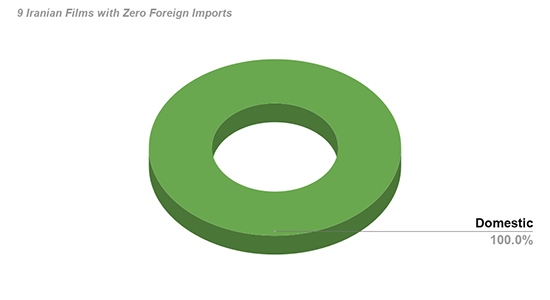
Film screenings in cinemas are currently ongoing; nine movies spanning a mix of genres including comedy, drama, fantasy and animation are presently showing in theaters across Iran. However, sales figures are nowhere near comparable to the same period in previous years.


Tehran Another View © Mehregan Film
Due to the unstable post-war conditions, the owners of films ready for release are reluctant to screen their works in cinemas. Although box-office turnout improved slightly following the release of a comedy film in late April 2026, the quality of the movies currently showing still lacks the appeal needed to draw larger audiences to the cinema.
Going to the cinema is considered a low-cost form of recreation for the people of Iran; compared with other leisure expenses such as concerts and theatre, it remains the most affordable and accessible cultural entertainment available to the public. A dynamic ticketing scheme offers reduced prices on certain days to help maintain this affordability.
During the final weeks of the 40-day war, contrary to the expectation that a calamity could strike at any moment, people flocked to the cinemas. On Tuesday, March 31, 2026, when tickets were half-price, nearly 80,000 people attended. By comparison, 195,546 attended on Tuesday, April 22, 2025, and 166,770 on Tuesday, May 27, 2025. Despite the tensions and the threat of war, people continued to watch movies and chose the cinema as a form of recreation.
Film distributors have expressed hope that the release of quality films backed by government support will alleviate the challenges faced by the cinema exhibition sector and revitalize movie theaters.
To return to its heyday, the Iranian film industry needs a change in storytelling, an appreciation of modern audience tastes, and the creation of experiences that make the big-screen viewing worthwhile. Otherwise, cinema lineups will continue to be filled with films screened merely to avoid empty schedules, movies that neither draw audiences to theaters nor offer any hope of revitalizing the industry. Whether in times of war or otherwise, cinema can still serve as a sanctuary, but only if it adapts to today’s reality.
Technology and Production Services
Artificial intelligence is considered one of the most transformative factors in the Iranian film industry. Innovative technologies can reduce production costs and increase opportunities for smaller countries to participate in the global market. Artificial intelligence will also find application in areas such as the production of special effects, editing, set design, audience market analysis, and even the development of initial film concepts, though this transformation also brings challenges regarding intellectual property rights, the role of human personnel, and the future of jobs in the film industry.
The development of the film industry in Iran is directly linked to technological advancements. The reduced cost of digital equipment, the proliferation of editing and special effects tools, increased access to content creation technologies, and the growth of online streaming platforms have made entering the filmmaking industry easier than in the past.
For this reason, film production is no longer the exclusive domain of major film studios; countries possessing a skilled workforce, indigenous stories, and production capacity can play a more prominent role in the global arena.
Alongside the global growth of film production and the introduction of new technologies into the Iranian film industry, artificial intelligence has emerged as a decisive factor in the industry's future. Iranian cinema has also experienced significant technical advancement in recent years; notably, at the 44th Fajr National Film Festival, a feature film created entirely using artificial intelligence was screened for the event's audience.
Over the past two years, the Fajr Film Festival has screened films created using artificial intelligence; experts in cinema and artificial intelligence believe that, in addition to its dedicated cinematic and artistic segments, this event should launch a special section titled “Cinema and Innovation”, where films are evaluated and judged based on their creative use of technology, modern filming tools, software, artificial intelligence, special effects, and novel production methods.
The use of artificial intelligence, digital special effects, advanced filming technologies, content creation software, and other innovative tools can enhance the quality of cinematic works and pave the way for presenting Iranian narratives on a global scale.
In such a context, Iranian cinema can serve as one of the most important tools for documenting historical experiences and conveying the national narrative. Utilizing modern technologies to produce films centered on this subject is not merely a cultural activity; it constitutes part of the competition in the realms of narrative and soft power.
Iran’s film industry is not merely a cultural asset; it is considered part of the country’s innovation capacity. Leveraging its cinematic heritage, a skilled workforce, experience at international film festivals, and an increasing volume of productions, Iran is on the path to becoming a key player in the Middle East’s creative economy.
On Sunday, June 7, 2026, the first session on the technical achievements of Iranian cinema, focusing on a critique and review of the special effects in the feature film Moses the Kalimullah, was held at Tehran’s Farhang Cinema, organized by the Deputy for Technology Development and Studies of the Iranian Cinema Organization.


This event was held to evaluate and showcase technical capabilities and achievements in areas such as special effects, sound, editing, laboratory work, animation, and cinematography within Iranian cinema; it was attended by the special effects designer and executor, the crew of the film Moses the Kalimullah, and technical experts.
At this meeting, attended by a group of cinema executives, directors, experts, and enthusiasts, advancements in cinema-related knowledge and technology were discussed and examined with the aim of transferring and promoting them among Iranian filmmakers.
During the program, experts answered questions from the audience and engaged in discussions regarding topics such as the process of technical training within institutions and organizations, the short lifespan of technology, the application and future of artificial intelligence, the use of modern technologies in cinema and television, and recent internet disruptions and their impact on the country's film infrastructure.
Streaming & Digital Platforms
In the first half of 2026, digital online streaming platforms suffered a severe blow due to a complete 21-day blackout of both national and international internet services, as well as instability, disruptions, international connectivity outages, and damage to communication infrastructure experienced during the 40-day war.
The repercussions of this destructive war led to a decline in film production and poor theatrical release conditions; collectively, these issues resulted in financial losses for film owners, particularly within the private sector. However, given the closure of offices and the fact that people were staying at home, platforms sought to partially improve the economic state of Iran's film and entertainment industry by ramping up their activities and implementing strategies, such as streaming movies and series via the national network, which resumed on January 29, 2026, with international connectivity restored gradually thereafter.
A series of events surrounding this war led to a surge in interest among art enthusiasts in online platforms for streaming movies and series. Accordingly, since the onset of the 40-day conflict, numerous productions reflecting the prevailing circumstances have been released on various home entertainment platforms; each has endeavored to stand in solidarity with the public during this crisis, making a meaningful impact by offering a diverse range of programming.
In addition to these factors, the addition of various films and theatrical productions to the platforms' online streaming schedules further heightened audience interest. Collectively, these developments fostered a stronger connection between the public and home entertainment networks and streaming platforms, driving a desire for greater engagement with them.
As this need among the public emerged, platforms also reached out to audiences, striving to alleviate the harshness of those times. During the war, numerous works such as films added to online streaming sections and other areas of these networks found their way onto the platforms, reflecting the prevailing circumstances.
Streaming platforms made every effort to stand by the public during wartime, enabling audiences to watch their favorite content; to this end, the cost of online streaming remained unchanged, with no price hikes, a move aimed at showing solidarity with viewers.
Despite the fixed pricing set for online screenings, platforms strove to maximize audience satisfaction; to this end, discounts on subscriptions and screening tickets were offered during the war, ensuring that audiences faced no financial concerns in accessing them.
During situations such as internet disruptions, economic crises, or war, online streaming platforms provided audiences with content suited to the times. During the war, some of these platforms made all children's content, both Iranian and foreign, available for free; this encompassed over 5,000 titles aimed at children and adolescents.
During times of crisis, audiences and fans of movies and series engage more frequently with online platforms; consequently, a number of streaming services have decided to host the public by making certain sections of their content free of charge.
Co-Production
Western cinema appreciates and has discovered the poetic essence of Iranian cinema to the extent that it is even taught as a subject in some foreign universities, whereas in Iran, cinema courses are generally not offered within non-cinema degree programs, although several universities, including the University of Tehran, the University of Art, IRIB University, and Soore University, offer dedicated cinema degrees at bachelor's and master's level.
Iranian directors have developed a unique cinematic style through their work, a cinema that upholds the universal values of humanity, kindness, and resistance against oppression. Iranian films garner acclaim from international festivals, institutions, and film communities for their minimalist approach and aesthetics, as well as for their ability to convey complex issues and address diverse subjects without resorting to explicit depiction on screen. One strategy involves addressing the theme of romantic love between adults by viewing it through the innocent eyes of children. Another strategy entails using traditional rural life as a backdrop to examine social issues related to urban living.
Given the valuable capabilities and standing of Iranian cinema at international festivals, collaborative ventures with foreign filmmakers and producers today can facilitate the exchange of knowledge and technology, further strengthening Iran's position on the global stage.
Iranian filmmakers continue to seek out fresh, creative narratives that can help attract international audiences. By employing artistic approaches and working with limited resources, Iranian independent cinema has succeeded in creating outstanding works. This trend could further enhance Iran's global standing and prestige in the future.
Asghar Farhadi, a renowned Iranian filmmaker and two-time Academy Award winner, presented his latest film, Parallel Tales, a co-production involving France, the United States, Belgium, and Italy, at its world premiere within the main competition section of the 79th Cannes International Film Festival in 2026.

In Parallel Tales, French stars including Isabelle Huppert, Vincent Cassel, Virginie Efira, Pierre Niney, Adam Bessa, and Catherine Deneuve appear in an ensemble cast.
Iranian film editor Hayedeh Safiyari edited the film, marking her seventh collaboration with Farhadi.
Filming for Parallel Tales, Asghar Farhadi’s tenth feature, began in Paris on September 8, 2025, and concluded three months later, followed by post-production in France.
The film is produced by France’s Memento Production and the U.S.-based Anonymous Content, alongside Farhadi.

Farhadi has received numerous major international awards throughout his career. A Separation won the Golden Bear at the 2011 Berlin International Film Festival and the Golden Globe and Academy Award for Best Foreign Language Film. He won a second Academy Award for The Salesman, while A Hero received the Grand Prix at the 2021 Cannes Film Festival.
Mansour JAHANI
Independent Journalist
Over the years, Mansour Jahani, as a journalist specializing in independent cinema, has worked with prominent Iranian filmmakers and supported their work in the media, from the late and great Abbas Kiarostami to Asghar Farhadi, Jafar Panahi, Mohammad Rasoulof, and Bahman Ghobadi.
Mansour Jahani, as an independent journalist and reporter, has covered international film festivals in Cannes, Berlin, Venice, San Sebastian, Thessaloniki, London, Karlovy Vary, Tallinn, Locarno, Busan, Tokyo, Toronto, IDFA, etc.
In 2023, 2024, and 2025, he participated as a judge in the voting of the American magazine IndieWire at the Cannes Film Festival and selected the best films.
Mansour Jahani, as an independent journalist and reporter, has covered international film festivals in Cannes, Berlin, Venice, San Sebastian, Thessaloniki, London, Karlovy Vary, Tallinn, Locarno, Busan, Tokyo, Toronto, IDFA, etc.
In 2023, 2024, and 2025, he participated as a judge in the voting of the American magazine IndieWire at the Cannes Film Festival and selected the best films.
– Exchange rate used: approx. USD 1 = IRR 1.4M