Title
THE A REPORT
2026 H1
 Amarsanaa BATTULGA
Film critic, programmer
Amarsanaa BATTULGA
Film critic, programmer
Updated on 6 Oct 2026
Overview
In the first half of 2026, the Mongolian film industry was marked by uncertainty more than outright optimism or cautiousness. The most significant developments centered heavily on the exhibition sector, punctuated by a major venue closure and shifting theatrical landscapes. The standout news of the reporting period was the unexpected shutdown of the Urgoo 3 IMAX, a central hub for Ulaanbaatar’s moviegoing public. This closure will without doubt fundamentally alter the distribution of cinema audiences in the capital, but how exactly it will affect audience habits and box office remains to be seen.
While commercial studios continue to rely on low-budget, fast-turnaround genre titles—dominated by psychological thrillers, urban comedies, and historical dramas—independent filmmakers are increasingly leveraging foreign co-productions and public funding mechanisms established under the Law on Promotion of Film Art. Commercial and critical success of local films in recent years has brought encouragement to the industry. But this optimism is tempered by persistent macroeconomic constraints, such as high inflation (reaching 12% in June) and rising production costs.
Top 6 Domestic Films in Mongolia Box Office (H1 2026)
You can scroll left and right to view the content.
| No. | Title | Director | Country | Genre | Admission Numbers | Production Company |
|---|---|---|---|---|---|---|
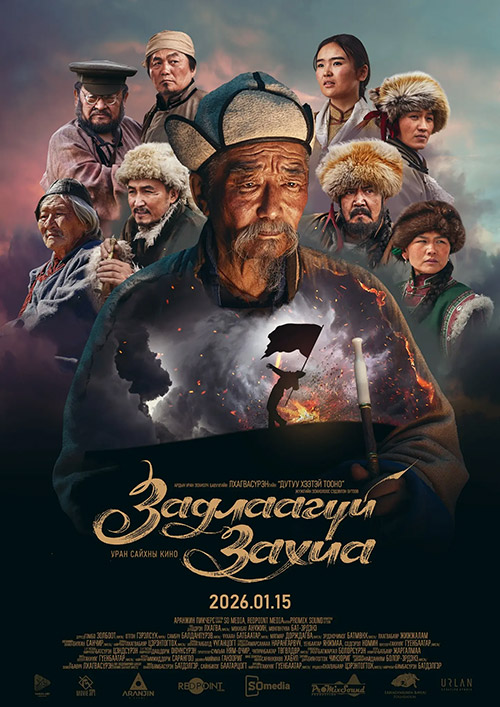
| 1 | The Unopened Letter (Zadlaagui zahia) | Batdelger Byambasuren | Mongolia | Drama | 77,501 | Aranjin Pictures |
| 2 | Enemy of Society (Niigmiin daisan) | Garamkhand Bayanjargal | Mongolia | Drama, Thriller | 70,000 | Garam Media, Logic Film |
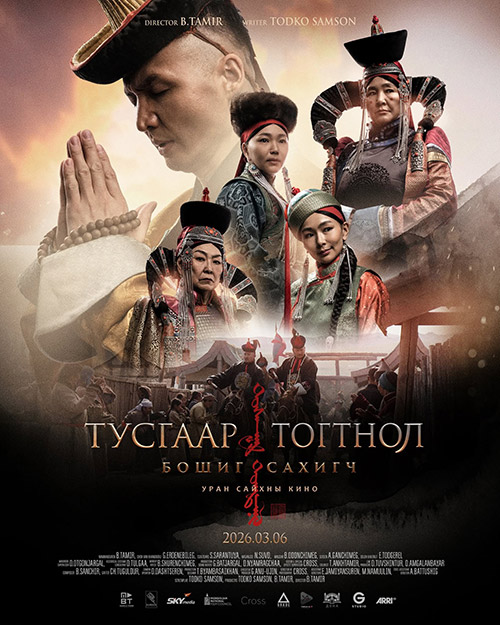
| 3 | Independence (Tusgaar togtnol: Boshig sahigch) | Tamir Bat-Ulzii | Mongolia | Historical, Thriller, Drama | 51,524 | Made by Tamir, Samson, Skymedia |
| 4 | The Last Clown (Suulchiin alialagch) | Enkhgerel Altangerel | Mongolia | Drama | 11,951 | Nomadia Pictures, GL, White Mushroom |
| 5 | Daddy’s Daughter (Aaviin ohin) | Damdinsuren Boldbaatar | Mongolia | Comedy | 10,452 | Nomadia Pictures, Munkh Dayan Entertainment, Gyalz Film, ZI Entertainment |
| 6 | Guests from the Future (Ireeduigees irsen zochid) | Tuguldur B | Mongolia | Comedy, Adventure | 9,362 | Orange Entertainment, Ddish TV, Film Owl |
Disclaimer: These admissions numbers were self-reported by the main production companies of each film. The only exception is the numbers for Independence (Tusgaar togtnol: Boshig sahigch) which was retrieved from the local box office and news portal Kinosan.mn. Due to various bureaucratic traditions, both private corporations and government institutions in Mongolia often do not directly interact with individuals, including researchers and journalists. This has been the single biggest hindrance in the researching and writing of a report such as this. Virtually all data and information in the present report were acquired through the writer’s personal contacts in various companies and government bodies. Hence, many of the sources have requested to remain anonymous. Even then, however, most declined to share significant data for fear of any potential troubles.
Production Landscape
Film production in Mongolia is traditionally seasonal, with the vast majority of shooting activity heavily concentrated in the second half of the year. This scheduling pattern is dictated by the country’s unique climate, characterized by long and severely cold winters, which means that cast and crew have to utilize the brief summer months as much as they can (while the general population takes part in the ingrained cultural habit of extensive vacationing during the same time). Consequently, the production landscape during the first half of the year remained characteristically quiet. Interestingly, this period also saw a noticeable dip in theatrically distributed domestic features, with only fifteen local films securing theatrical releases. In stark contrast, fifty-nine titles debuted as straight-to-streaming releases, underscoring a persistent shift in how production activity is being channeled and monetized.
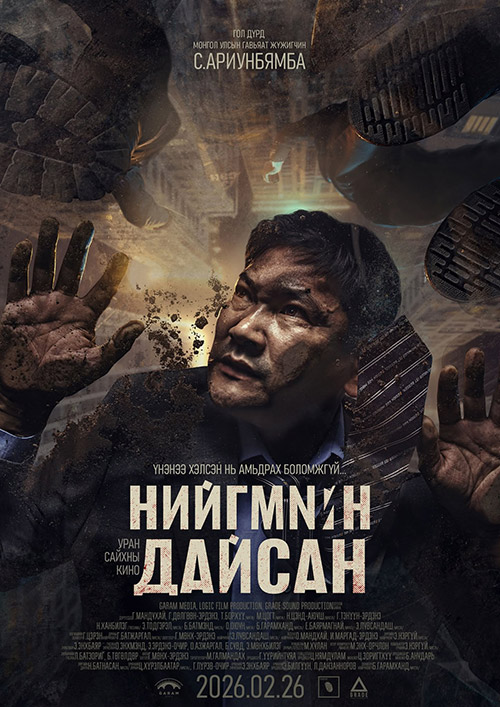
Enemy of Society © Garam Media, Logic Film
Independence © Tamir, Samson, Skymedia
Despite the slow production pace, development and pre-production news provided a steady stream of anticipation for the second half of the year as well as the coming years. Several high-profile upcoming releases were officially announced, including features such as Ovgor, Tosgon: Chinese Ghost, and Suulchiin Shiliin Sain Ers. Additionally, audiences can anticipate a biopic centering on the popular pop-R&B and hip-hop boy band “Guys”, alongside a massive historical epic projected to release in 2027, currently being developed by Fantastic Production with funding from the country’s largest production player Nomadia Pictures and the British–Australian multinational mining giant Rio Tinto.
According to both studio and independent producers, the primary production challenge remains an acute shortage of specialized technical crew. This situation often leads to one crew member having to take on multiple roles, often managing tasks they aren’t familiar with or trained for. Additionally, rising equipment rental costs have squeezed independent margins, prompting calls for more formalized industry guilds and technical training frameworks. Partly responding to these longstanding problems, the Mongolian National Film Council has facilitated the establishment of producers’ and directors’ associations, after multiple meetings with local film workers. It is planned that in the future the council will no longer communicate with filmmakers individually and vice versa. Instead, the associations would represent their members' interests to the council / government. How this arrangement will pan out is yet to be seen in practice.
Financing Models
Tracking the exact financial health of the Mongolian film industry remains notoriously difficult, as comprehensive data regarding overall investment volumes and specific production budgets is currently unavailable. Private equity from domestic conglomerates (mining, telecom, real estate) remains active but cautious. At the same time, there are emerging signs of regulatory support taking practical effect within the sector. The first successful example of a newly implemented one-percent tax exemption—under the Business Entity/Corporate Income Tax Law which includes a provision that allows companies to receive a one-percent tax deduction for funding arts and cultural initiatives—has reportedly been finalized but is yet to be announced publicly.
The state-backed Film Promotion Fund has also been highly active, having already announced its two open calls for 2026, which means no further funding rounds will occur for the remainder of this year. While the results of the second open call haven’t been announced yet, the results of the first one revealed a surprising pivot in institutional priorities, as the fund granted production support to three short films, alongside one feature, one television show, and an audio description project designed for visually impaired audiences. This unprecedented level of financial attention directed toward short films suggests that the film council may be strategically managing the remaining balance of the fund’s budget. On the one hand, by opting to support a larger number of projects that require smaller financial commitments, rather than concentrating capital on a few heavily budgeted features, the council is effectively broadening its grassroots impact. On the other hand, however, the council has reportedly rejected funding to festivals and film development labs that have received support more than once previously. The decision puts such initiatives in precarious positions when they could benefit from financial stability for their long-term sustainability.
Distribution Climate
Mongolia’s film distribution landscape remains heavily consolidated in the first half of 2026, with no new notable players. Domestic features enjoy a highly privileged position within the Mongolian distribution climate, largely because local films are incredibly popular and reliably generate substantial revenue. Theater operators welcome these homegrown projects with open arms, readily granting them screen space, as long as they do not suffer from major technical shortcomings. To ensure maximum profitability and avoid cannibalizing each other’s audiences, local producers and exhibitors adhere to a strict, albeit unwritten, industry agreement. This consensus dictates that no more than one local film will be theatrically released in any given week. Because the number of domestic theatrical releases remains well below the number of available weeks, the arrangement leaves sufficient room to avoid direct competition between local titles. Remarkably, this delicate scheduling ecosystem is tracked entirely informally through social media. Cinema managers routinely post open calls on their personal Facebook pages to update producers on which release weeks have been claimed and which slots remain available.

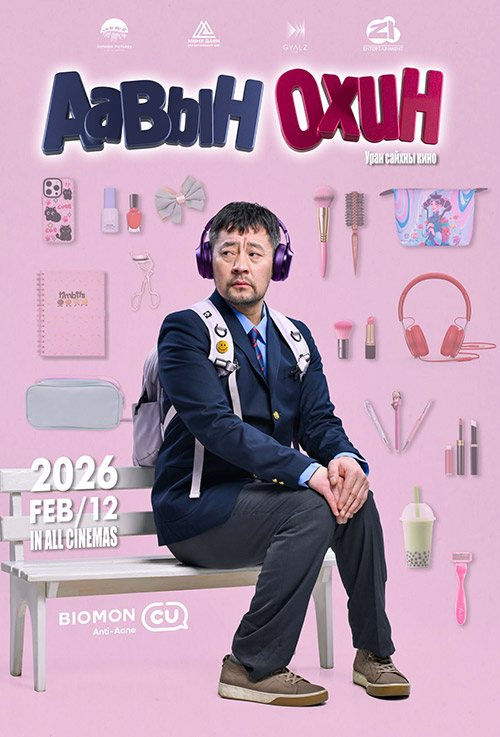

Daddy's Daughter © Nomadia Pictures
Guests from the Future © Orange Entertainment
Theatrical Reach
The first half of the year brought major shakeups to Mongolia’s exhibition sector, completely redrawing the theatrical map of Ulaanbaatar. The most consequential event was the late June closure of the Urgoo 3 IMAX, which was widely considered the most centrally located and profitable cinema in the country. The cinema chain explained via its official Facebook page—to be specific, in a comment under a post, which goes on to illustrate how so much of the sector functions informally—that the closure was forced after the Shangri-La high-end shopping mall raised its rent by four times. Because industry insiders note that the MCS Group, which owns the Shangri-La and is the largest corporation in Mongolia, has no current plans to enter the film exhibition business, central Ulaanbaatar has been left entirely without a cinema. Rival cinema chains have been actively competing to establish a presence in the void left by Urgoo 3, but negotiations have failed so far, according to a former high-level exhibition sector veteran. Some speculate that an international chain, most likely Korea’s CGV, might enter the market, given that Korean businesses such as convenience stores and coffee shops already have a significant footprint in the Mongolian economy. While Mongolia technically retains an IMAX screen because Urgoo opened a Laser IMAX at its Urgoo 1&5 branch last year, its inconvenient location in the traffic-heavy northwest part of the city deters casual audiences. Viewers are likely to make the difficult commute only for massive Hollywood tentpoles like The Odyssey and Dune: Part Three. Having previously also closed Urgoo 2 following a separate rental dispute in H2 2025, as covered in detail in the previous edition, Urgoo likely finds itself in a difficult financial position.
Meanwhile, earlier reports regarding Tengis Cinema’s acquisition of Soyombo cinema were clarified. It emerged that Soyombo had only leased its venue to Tengis for two years. During that lease period, Tengis installed modern cinema servers and updated equipment in a venue that previously functioned more like a basic screening room. When the lease ended earlier this year, Tengis sold the newly installed equipment back to Soyombo, which has since reverted back to its name from Tengis 2 and resumed independent operations.
Despite these urban closures and structural shifts, exhibition expansion continues steadily in the suburbs and rural provinces. Theatrical exhibition in Mongolia is highly concentrated in the capital city, Ulaanbaatar, which accounts for nearly 90 percent of the total gross box office returns, according to one industry insider’s estimate. In April, United Cinema opened at the newly built United Mall in the Yarmag area, targeting a demographic of young families who have relocated to the outskirts due to cheaper real estate prices. In February, the Skywing event hall was successfully repurposed to become the second branch of CinemaNext. This versatile venue had previously hosted the Kharkhorum International Film Festival’s opening ceremony and various local film premieres last year. CinemaNext also expanded into the countryside by teaming up with the Sharga theater in Baruun-Urt soum, Sukhbaatar province, effectively launching it as their third branch. This dual-purpose strategy of utilizing a single rural venue for both traditional theatrical performances and cinema screenings is steadily catching on, mirroring Urgoo’s previous collaboration with the Blue Pearl theater in Khuvsgul province. Furthermore, the MLab Cinema opened in Arkhangai province, and at least three additional mall cinemas are preparing to launch operations in 2027.
However, all these venues continue to screen roughly the same commercial slate, highlighting the dire need in Mongolia of independent film distributors and cinemas. Arthouse and independent films must rely almost exclusively on the festival circuit in the current landscape. The Golden Ger International Film Festival, known for its small scale and strong curation of short films, provided one such outlet and relocated to the Prime Cineplex Encanto this May. The European Film Festival also provided a brief cultural oasis in late June, serving as the final public event held at the Urgoo 3 venue before its permanent closure. Screenings were packed to the point that audiences sat on the stairs (including this writer). This massive turnout was largely attributed to the fact that tickets were free. This lack of financial pressure was made possible because the festival was supported by the European Union and various consulates and embassies. The Kharkhorum International Film Festival was not held this year, reportedly due to lack of funding. The festival has previously been held twice in December 2023 and June–July 2025. The financial uncertainty and irregular schedule have effectively turned Kharkhorum into a biennial event, that is, if it’s held next year without fail.
As for regular multiplexes, general admission ticket prices have steadily increased across the board. Urgoo initially priced its Laser IMAX tickets for The Odyssey at a steep MNT 35,000 (USD 9.7), which represents a heavy financial sum in the local context, before quickly adjusting the price down to MNT 15,000 (USD 4.2). This dramatic price drop was likely a promotional incentive designed to draw audiences to the new location, as the closure of Urgoo 3 revealed that a vast majority of Mongolian moviegoers were entirely unaware that a second IMAX location even existed.
Unfortunately, comprehensive admissions data could not be gathered for this reporting period. The Cinema Management Association, which has been inactive since March 24, has yet to tally their numbers, and when the production companies behind all 15 theatrically released films in the first half of 2026 were contacted directly regarding their performance, most either ignored the request or refused to share their data due to low turnout figures. A new ticket sales platform launched in June, Tiko, has integrated all major cinemas in the country except for Urgoo. Initiatives such as this continue to fight the uphill battle of making Mongolia’s exhibition sector more transparent.
Technology and Production Services
A considerable lack of advanced technology and domestic production services continues to hinder the local film industry, particularly in the realm of post-production. Independent and arthouse productions frequently seek post-production services in Southeast Asia, taking strategic advantage of the region’s relative geographical proximity and overall affordability. A recent illustration of this offshore trend is director Byamba Sakhiya’s latest feature film Zogsool (Stop). With a confirmed world premiere at the Busan International Film Festival as part of its Vision section, the project completed its color grading and sound mixing in Cambodia.
On the domestic equipment rental front, there have been some modest technical upgrades. Friday Production recently introduced the new Sony FX5 camera to the Mongolian market simultaneously with its international release, making high-end digital capture readily available for local filmmakers to rent. However, larger technical and visual ambitions remain completely outsourced. When the Unitel Group—another conglomerate under the MCS banner and is the parent company of Nomadia Pictures—commissioned a large-scale immersive experience to celebrate its 20th anniversary, the Mongolian animation studio named Flame Bros worked as a producer, but the overarching immersive design and technological framework were handled entirely by the Chinese company, Temple of Light Experience. This heavy reliance on foreign technical supervision suggests that Mongolian creatives are not yet fully equipped to independently execute large-scale, technologically immersive projects.
Streaming & Digital Platforms
The digital distribution ecosystem continues to expand rapidly, completely reshaping how local audiences consume content outside of the theater. Out of all the newly acquired films added to domestic IPTV and OTT platforms during the first half of the year, 67 were titles produced in the current year. Only eight of these local films were added to digital libraries after completing a traditional theatrical release window, while the remaining 59 bypassed the cinema entirely as original, straight-to-streaming releases. The digital infrastructure supporting this localized content boom relies primarily on two major IPTV services, Univision and Skymedia, while a host of smaller OTT platforms fiercely compete for the remaining market share. To meaningfully differentiate themselves in an increasingly crowded digital marketplace, these platforms are directly competing by commissioning and developing exclusive content, placing a particular emphasis on television series. According to a local OTT company staff, global streaming giants such as Netflix have yet to bring a considerable competition to the local platforms mostly due to language barrier and a lack of local content.
Of these 59 streaming releases, comedy and adult-oriented erotic content account for 20 and 19 titles, respectively. Notably, 19 erotic titles were released in H1 2026 alone, compared with 22 throughout 2025, suggesting rapid growth in this genre on streaming platforms.
Additionally, hybrid distribution models are gaining traction among independent creators. The strategy of hosting a single, high-profile theatrical premiere before immediately pivoting to digital streaming is becoming increasingly popular across the market. This flexible approach was most recently utilized for the release of 18 Days, an electoral education documentary produced by the marketing company Noorog.
Co-Production
There was notable news regarding international festivals and co-production involving Mongolia in the first half of 2026. The French–Mongolian documentary Colors of White Rock by Khoroldorj Choijoovaanchig celebrated its highly anticipated world premiere at the prestigious Tribeca Film Festival. While numerous foreign documentaries have been filmed in Mongolia in recent years, this particular project stands out because it is a rare documentary about Mongolia made by a Mongolian filmmaker. The production of such a film is significant, given that the domestic documentary industry is virtually nonexistent.
In the fictional realm, director Lkhagvadulam Purev-Ochir’s highly anticipated sophomore feature, The Vision of Lonely Mountains, was officially selected for development support by the Hubert Bals Fund at the International Film Festival Rotterdam. Collaborative domestic efforts to bridge local and global markets were also visible at the FilmNomad Film Forum, which was held in June in partnership with Nomadia Pictures. The event featured a keynote speech by Nomadia’s executive producer Naranbat Bayasgalan, though the heavy reliance on dated industry data from 2024 unfortunately highlighted the urgent need for better internal data collection and research practices within the local ecosystem. During her speech, Naranbat also announced updates on the highly anticipated Korean–Mongolian co-production, Snow in June. She noted that this collaboration between Korea’s Kairos Makers and Mongolia’s Nomadia Pictures marks the first actual financial co-production between Mongolia and Korea, pointing out that previous so-called co-productions simply hired an international cast and/or crew for local films. It was also announced in the speech that the film is now completed and will have its premiere at the Busan International Film Festival this year.
The Mongolian National Film Council expanded its international cultural outreach by organizing collaborative screening events and signing strategic documents with foreign counterparts. These diplomatic efforts included hosting the 3rd Mongolian Film Days in Busan, Korea, which was accompanied by television broadcasts of Mongolian movies, as well as organizing dedicated film days in Tashkent, Uzbekistan. Furthermore, the council successfully secured a special Mongolia spotlight at the Bishkek International Film Festival in Kyrgyzstan in June, culminating in a formal memorandum of understanding that promises to strengthen future regional co-productions.
Amarsanaa BATTULGA
Film critic, programmer
Amarsanaa Battulga is a film critic and programmer from Mongolia. His writing has appeared in publications such as Die Welt, Cineuropa, photogénie, and Documentary, among others. He has served on juries at festivals in Locarno, Hong Kong, Singapore, and Ulaanbaatar, and is a FIPRESCI member, Berlinale Talent Press alumnus, and voter for the 83rd Annual Golden Globes.