Impact Japan - Festivals, Theaters, Audiences: A Case Study of What Should We Have Done?
- Mon, 12 October, 16:00 - 18:00 | Day 3
- Event Room C
- #Sales Agent
- #Distribution
- #Production
IMPACT ASIA IMPACT DAY Special Screening *First-come, first-served for badge holders
- What Should We Have Done? (FUJINO Tomoaki, 101’)
- Date: October 11, 2026, 10:30
- Venue: 11F, Busan Film & Audiovisual Industry Center
- Language: Japanese
- Subtitle: Korean
- Moderator
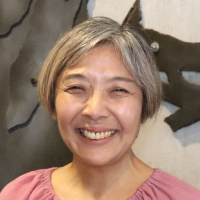
She has worked with the Yamagata International Documentary Film Festival since 1993 as Program Coordinator and Director of Tokyo Office. As head of Documentary Dream Center, she organizes filmmaking workshops in various Asian destinations since 2009 and launched Yamagata Documentary Dojo, a residency program for independent filmmakers in 2018. She supports Japanese films liaison internationally, and aims to foster documentary, its makers and audiences through international exchange. She is producer of Nude at Heart (2021) and other documentaries.
- Presenter
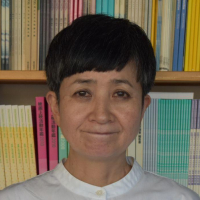
Iwasaki Yuko has served as Secretary General of the Japan Community Cinema Center since its establishment in 2003. The Center builds networks among film exhibitors and supports a rich cinematic environment through film screenings, film education, exhibitor training, and research on film exhibition. Its network includes film archives, local cinemas, public facilities, film festivals, independent screening groups, and libraries across Japan.
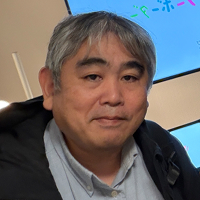
Fujino Tomoaki was born in Sapporo in 1966 and primarily makes films about human rights violations against minority groups. His works include Return After 85 Years: Ainu Remains to Kineusu Kotan (2017) and Kamuycep: Salmon Fishing and Indigenous Rights (2020). What Should We Have Done? (2024) screened at YIDFF and TIDF and drew 170,000 admissions during its theatrical release in Japan. He also produced Yumiko Asano’s Yuho No Border (2026).
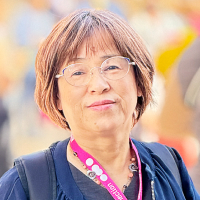
Asano Yumiko was born in Hokkaido in 1958 and studied at Musashino Art School. Her graphic prints and paintings have been shown in numerous exhibitions. In 2013, she co-founded Zou-Shima in Sapporo with filmmaker Tomoaki Fujino. She produced What Should We Have Done? (2024). Her directorial debut, Yuho No Border (2026), screened at Cinema at Sea and Nippon Connection before its theatrical release in Japan.
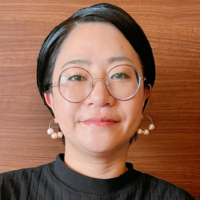
Mukaitsubo Miho has worked as a distributor and publicist at TOFOO FILMS since 2009, specializing in Japanese documentary films. Her selected works include films by Kazuhiro Soda, Life Is Fruity (2017), Boy Soldiers: The Secret War in Okinawa (2018), and Shusenjo: The Main Battleground of the Comfort Women Issue (2019).
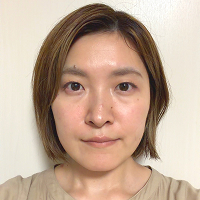
Hayasaka Sonoko has worked as a distributor and publicist at TOFOO FILMS since 2021, specializing in Japanese documentary films. Her selected works include Nihonbara Diary (2022), Soup and Ideology (2022), My Story, the Buraku Story (2022), and Close to the Bone (2024).
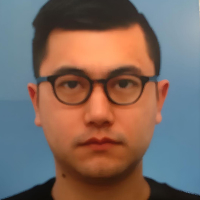
Ishikawa Shohei has worked across programming, projection, and film distribution at Polepole Higashi-Nakano. His programming projects include special screening series on dams, Chernobyl, Sakura Motion Picture, and coal mines in film, as well as the Hori Teiichi Retrospective. His distribution credits include Take Your Time – Arayashiki (2015), I Go Gaga, My Dear (2018), Beyond the Infinite Two Minutes (2020), Naze Kimi wa Souri-Daijin ni Narenai noka (2020), and The Narrow Road (2022).
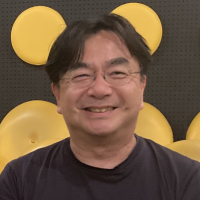
In 1999, Otsuki founded Tollywood, an independent cinema in Shimokitazawa, Tokyo, and in 2003 opened Polepole Higashi-Nakano. He has been involved in the release and presentation of notable films including Voices of a Distant Star (2002), Life Is Fruity (2017), and What Should We Have Done? (2024). As a film producer, his recent credits include River (2023) and You Are the Film (2026).